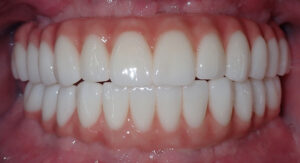
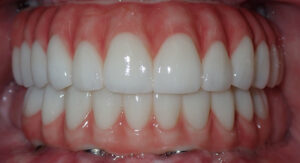
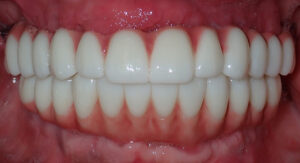
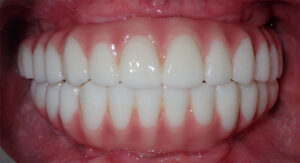
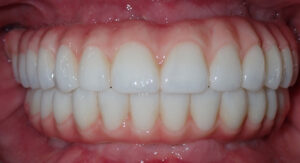
Deciding between dental implants and dentures is more than an expense — it affects how you eat, how your face looks over time, and what care you’ll need for years to come. This guide explains what implants and dentures are, how each works biologically and mechanically, and why a long-term outlook—covering durability, bone health, comfort, and financing—matters. You’ll get clear, evidence-informed explanations of osseointegration, realistic lifespan and maintenance expectations, and the everyday trade-offs in appearance and chewing function. The comparison is organized into six focused sections: implant basics and materials, denture types and benefits, longevity and maintenance, cost and financing, effects on jawbone and oral structure, and comfort plus aesthetics. Our goal is to help you balance short-term affordability with long-term oral health so you can choose the best path for your situation.
What Are Dental Implants and How Do They Work?
A dental implant is a surgically placed post that replaces a tooth root and bonds with the jawbone through osseointegration. As bone cells attach to the implant surface, the implant becomes a stable foundation for a crown, bridge, or denture, restoring chewing force and helping preserve jawbone volume. The main advantage is a fixed restoration that transfers bite forces into bone, slowing the bone loss that follows tooth extraction. Modern implant care relies on detailed 3D imaging and careful planning to place implants precisely and improve long-term predictability.
What Types of Dental Implants Are Available?
Implant solutions range from single-tooth replacements to multi-unit bridges and full-arch restorations like TeethNow, as well as specialized zygomatic implants for severe upper-jaw bone loss. Single-tooth implants replace one tooth with a crown on a single fixture. Multiple implants can support a bridge when neighboring teeth are missing and restore proper bite. Full-arch protocols such as TeethNow allow a fixed prosthesis across an entire jaw, often providing immediate function. Zygomatic implants anchor into the cheekbone for patients with insufficient maxillary bone, offering an alternative to extensive grafting and enabling fixed full-mouth rehabilitation.
A short list of common implant use-cases:
- Single-tooth implants: Replace one tooth with a crown supported by a single fixture.
- Multiple-tooth implants: Support a bridge when several adjacent teeth are missing.
- Full-mouth (TeethNow) implants: Provide immediate fixed full-arch restorations for edentulous jaws.
- Zygomatic implants: Offer anchorage in the zygoma for patients with severe maxillary bone loss.
Choice of implant depends on anatomy, treatment goals, and bone support — which also informs material decisions like zirconia versus titanium.
How Do Zirconia Implants Compare to Titanium Implants?
Zirconia and titanium differ in strength, appearance, and tissue response, and the right choice depends on clinical needs and esthetic priorities. Titanium has decades of predictable outcomes and mechanical resilience, making it the go-to for many situations. Zirconia is tooth-colored and can reduce metal visibility, which is helpful in thin gums or front-tooth cases; some clinicians also note favorable soft-tissue response. Material selection balances clinical evidence, cosmetic goals, and the clinician’s experience. Today’s practices use 3D planning to match material and design to each patient’s anatomy for the best long-term result.
What Are Dentures and What Are Their Benefits?
Dentures are removable or implant-retained prostheses that replace missing teeth and the surrounding tissue contours. They restore basic function and appearance without implant surgery in some cases. Full removable dentures replace an entire arch and sit on the mucosa; partial dentures fill gaps when some natural teeth remain and use clasps or attachments for retention. Implant-supported dentures combine the lower cost of a denture-style prosthesis with improved stability by anchoring to implants, giving better chewing and comfort than traditional removable appliances. Dentures are often faster to deliver and less invasive initially, making them a practical choice for many patients.
What Types of Dentures Can Patients Choose From?
Options include full removable dentures, partial dentures, immediate (transitional) dentures, and implant-supported prostheses. Full removable dentures replace every tooth in an arch and need periodic relining as the jawbone remodels. Partial dentures fill localized gaps and protect remaining teeth. Immediate dentures are fitted at the time of extraction to maintain appearance and function during healing but typically need later adjustments. Implant-supported dentures use two or more implants to stabilize the prosthesis and can turn a removable appliance into a far more secure solution.
A concise comparison of denture types:
- Full removable dentures: Non-surgical option for edentulous arches; rely on mucosal support.
- Partial dentures: Replace some teeth; attach to remaining dentition for retention.
- Immediate dentures: Temporary prosthesis placed after extractions; require follow-up adjustments.
- Implant-supported dentures: Improve stability and chewing by connecting to implants.
Knowing these categories helps patients weigh the trade-offs between surgery, stability, and ongoing maintenance.
What Are the Traditional Advantages of Dentures?
Dentures are valued for a few practical reasons: lower initial cost, a non-surgical path for many patients, and relatively quick restoration of appearance and basic function. For those who aren’t candidates for surgery or who prefer to avoid it, dentures are a predictable solution that can be delivered in fewer visits. They also let clinicians restore facial support and occlusion right after extractions, which can be important socially and emotionally. These practical benefits must be balanced against longer-term compromises in bone preservation and fit.
How Do Dental Implants and Dentures Compare in Longevity and Durability?
Implants generally provide greater longevity because they transfer bite forces into bone via osseointegration. Removable dentures depend on soft-tissue support and are more prone to wear and mechanical failure. With good hygiene and routine care, implant crowns and bridges can last decades; dentures typically need relining, rebasing, or replacement every 5–8 years as the ridge changes and materials wear. Failure patterns differ: implant issues often involve peri-implant disease or component fracture, while dentures fail from acrylic fracture, tooth wear, or loss of fit. The table below summarizes typical lifespans and maintenance needs.
Prosthesis Type | Typical Longevity | Typical Maintenance / Failure Modes |
Single-tooth implant with crown | Many decades with care | Routine hygiene, occasional prosthetic repair |
Removable full denture | 5–8 years before replacement is common | Relining, rebasing, base fracture, tooth wear |
Implant-supported full-arch (fixed) | 10–30+ years with maintenance | Prosthetic wear, screw loosening, peri-implant checks |
Overall, implants often represent a longer-lasting solution, while dentures require regular prosthetic upkeep — a key factor in long-term planning.
How Long Do Dental Implants Last Compared to Dentures?
Many patients retain dental implants for life when biological and mechanical conditions are favorable; modern studies report high success rates over a decade. Dentures usually function well for 5–8 years before fit and occlusion changes prompt relines or replacement, and ongoing bone loss can speed functional decline for removable appliances. Smoking, uncontrolled medical conditions, and poor oral hygiene reduce implant longevity, while denture lifespan depends heavily on material wear and ridge remodeling. Comparing lifespans means factoring in maintenance cycles and potential complications to create a realistic plan.
Next we’ll outline the routine care both options require to stay healthy and functional.
What Maintenance Is Required to Ensure Longevity for Each Option?
Implants need consistent daily cleaning — brushing and interdental cleaning around abutments — plus regular professional exams to watch for peri-implant disease and prosthetic wear. Dentures require daily cleaning with recommended cleansers, overnight storage when appropriate, and periodic professional relines or adjustments as the ridge remodels. Both approaches benefit from scheduled dental visits to catch issues early: implants for tissue health and component integrity; dentures for fit and occlusion. A preventative mindset lengthens the life of either solution and improves comfort and appearance.
Key maintenance steps for patients include:
- Daily mechanical cleaning: Brush and floss implants; clean dentures with nonabrasive cleansers.
- Professional exams: Schedule regular checkups for peri-implant monitoring and denture assessments.
- Timely adjustments: Address sore spots, relines, and prosthetic repairs promptly to prevent complications.
These routines preserve oral health and extend the functional life of both implants and dentures.
After durability and care, the next concern for many patients is cost and what financing options are available.
At Dentistry by Dr. Kaplansky, implant planning focuses on durable, high-value solutions such as zirconia implant options and 3D imaging-guided placement. Dr. Igor Kaplansky, a board-certified implantologist, creates personalized plans that may include TeethNow full-arch protocols or zygomatic implants for patients with severe bone loss. We encourage patients to discuss financing and treatment sequencing at our Gasport office so they can make an informed choice that fits both clinical needs and budgets.
What Are the Cost Differences Between Dental Implants and Dentures?
Implants typically carry higher upfront costs because they involve surgery, restorative components, and lab work. Dentures usually cost less initially but may incur recurring expenses for relines, rebasing, and replacement. When you spread costs over time, implants can be more cost-effective because they reduce the need for repeated prosthetic renewals and better preserve bone. A full comparison should include diagnostics, imaging, grafting if required, and long-term maintenance to calculate a realistic cost-per-year. The table below gives an illustrative framework for common scenarios.
Treatment Option | Cost Type | Estimated Range / Long-term Consideration |
Single-tooth implant | Initial surgical + prosthetic | Higher upfront; low long-term replacement risk |
Full removable dentures | Initial prosthesis cost | Lower upfront; recurring relines and replacements |
Full-arch implant (TeethNow-style) | Full-arch surgical + prosthetic | High initial cost; greater longevity and fewer replacements |
Framing costs this way helps patients see how an implant strategy can convert repeated denture expenses into a longer-term restorative investment.
How Do Initial and Long-Term Costs Compare?
Initial implant costs cover diagnostics, surgery, and restorative components, so they’re higher up front. Dentures are less expensive initially but include periodic maintenance and replacements that add up. Annualizing costs — for example, a denture replaced every 5–8 years — can reveal that implant therapy becomes more economical over a longer horizon. Efficient clinical choices, like predictable full-arch protocols that avoid grafting, also improve implant cost-effectiveness. Patients benefit most from a cost-per-year comparison that weighs financial impact against improved function, bone preservation, and comfort.
What Financing Options Are Available for Dental Implants?
Many practices, including Dentistry by Dr. Kaplansky, offer flexible financing and can help you explore payment plans or third-party lenders to make implant therapy achievable. Common options include in-office payment plans, specialized healthcare financing, and staged treatment to spread costs while restoring essential function. Insurance coverage varies, so we recommend reviewing benefits and planning treatment phases with your team. A detailed estimate and financing conversation during consultation make it easier to plan responsibly.
A concise list of typical financing pathways:
- In-office payment plans: Spread costs directly through the provider over agreed terms.
- Third-party financing: Use healthcare lenders that specialize in dental loans.
- Phased treatment: Prioritize urgent phases and defer elective stages to manage cash flow.
After cost planning, a common next question is how each option affects jawbone health — the subject of the next section.
At Dentistry by Dr. Kaplansky, patients worried about jawbone preservation and esthetics can review options such as zygomatic implants and zirconia restorations. We combine 3D imaging with individual treatment plans to assess candidacy and recommend solutions that prioritize long-term oral health. Dr. Igor Kaplansky’s board-certified implantology expertise supports planning for cases with bone loss, and flexible financing options are available at our Gasport location.
How Do Dental Implants and Dentures Affect Bone Health and Oral Structure?
Dental implants stimulate the alveolar bone by transmitting functional loads, helping preserve ridge height and facial support through osseointegration. Removable dentures sit on soft tissue and don’t provide the same physiological stimulus, so progressive bone resorption commonly follows tooth loss. That resorption can reduce denture retention and alter facial contours over time. For advanced bone loss, options include grafting or alternative anchor points like zygomatic implants. The table below summarizes these biological effects and typical clinical outcomes.
Prosthesis | Biological Effect | Clinical Outcome |
Dental implant | Loads bone via osseointegration | Preserves ridge height, maintains facial support |
Removable denture | No physiological bone stimulation | Progressive resorption, reduced retention |
Zygomatic implant | Anchors into zygoma bypassing atrophic maxilla | Enables fixed restoration for severe bone loss |
This comparison highlights why implant-based approaches often protect oral structure and function better over the long term.
Do Dental Implants Prevent Jawbone Loss?
Yes. Implants help maintain jawbone by transmitting chewing forces into the bone, which encourages remodeling and preserves volume — similar to a natural tooth root. Placing implants immediately or early after extraction can reduce the extent of ridge resorption; delaying placement may increase the need for grafting later. Patient health, smoking, and infection risk also influence how well implants preserve bone.
What Are the Risks of Bone Loss with Dentures?
Because dentures rely on mucosal support and don’t load the bone, they’re associated with ongoing bone resorption. Over time this can cause loss of retention, changes in vertical dimension, and facial profile changes that complicate future care. Strategies to reduce these risks include moving to implant-supported prostheses, timely relining, or planning bone augmentation when needed. In cases of severe resorption, zygomatic implants or grafting can restore anchorage and allow long-term fixed solutions.
With biology covered, the final major comparison looks at comfort, stability, and appearance.
At Dentistry by Dr. Kaplansky, patients with concerns about jawbone preservation and esthetics can discuss advanced options such as zygomatic implants and zirconia restorations; the practice combines 3D imaging with personalized treatment plans to evaluate candidacy and recommend solutions that prioritize long-term oral health. Dr. Igor Kaplansky’s board-certified implantology expertise supports planning for cases with bone loss, and flexible financing options are available to help patients pursue durable implant-based rehabilitation at the Gasport location.
How Do Comfort, Stability, and Aesthetics Differ Between Dental Implants and Dentures?
Comfort and stability often differ significantly. Implants provide a fixed, secure foundation that feels and functions much like natural teeth. Removable dentures can shift, require adhesives, and cause sore spots until they’re properly adjusted. Implant-supported restorations improve chewing efficiency and speech by removing the micro-movements common to mucosa-supported dentures, which boosts confidence when eating and speaking. Aesthetically, implants allow crowns and bridges to emerge through the gumline for a natural profile, while dentures may need visible flanges to replace lost tissue. Consider immediate convenience versus long-term stability and natural feel when choosing between options.
Which Option Offers Better Comfort and Natural Feel?
Implants usually deliver superior comfort because they integrate with the jaw and distribute forces through bone, giving a stable, immobile restoration that feels closer to natural teeth. Removable dentures can feel bulky at first and often require an adaptation period; adhesives or relines are sometimes necessary to improve fit, and ongoing instability can limit diet. Implant-retained dentures reduce movement and are a middle ground for patients who want improved comfort without a fully fixed prosthesis. Comfort ultimately depends on prosthetic stability and the quality of supporting bone.
Practical factors that influence comfort include:
- Fit and adaptation period: Implants typically require less long-term adaptation; dentures often need multiple adjustments.
- Oral hygiene: Poor hygiene around implants can cause inflammation; denture hygiene affects mucosal health and comfort.
- Prosthetic design: Materials and occlusal setup heavily influence how comfortable a restoration feels.
Comfort outcomes therefore align with the degree of prosthetic stability and the quality of underlying bone support.
How Do Dental Implants and Dentures Compare in Appearance?
Implant-supported and fixed restorations usually deliver a more natural emergence profile and better soft-tissue mimicry than removable dentures, which may require flanges to replace lost tissue. Materials such as zirconia and high-quality ceramics offer excellent translucency and shade stability, especially important in the front teeth. Well-crafted dentures can look very good initially, but changing tissue and bone over time may alter the cosmetic result. Implants tend to maintain consistent aesthetics because they help preserve underlying bone and soft tissue.
A brief list summarizing aesthetic considerations:
- Emergence profile: Implants recreate tooth emergence through soft tissue for natural contours.
- Material selection: Zirconia and high-quality ceramics improve lifelike appearance for implants.
- Tissue changes: Dentures may need cosmetic updates as underlying bone and gingiva remodel.
These aesthetic differences lead many patients to choose implant-based restorations when long-term appearance is a priority.
At Dentistry by Dr. Kaplansky, patients exploring aesthetic goals can review zirconia implant options and digitally planned restorations as part of a personalized treatment plan. We use 3D imaging to project soft-tissue outcomes and align esthetics with functional needs.
Dentistry by Dr. Kaplansky provides personalized consultations at 8038 Rochester Rd. Gasport NY for patients who want to compare implant and denture pathways, discuss zirconia implant options, learn about TeethNow full-arch protocols, or explore zygomatic implant solutions for severe bone loss. Dr. Igor Kaplansky’s implant-focused services and flexible financing approach help patients match clinical needs to realistic treatment plans and long-term goals.
Frequently Asked Questions
What is the recovery process like after dental implant surgery?
Recovery typically involves a healing phase of several months while osseointegration takes place. In the first few days you may have swelling, bruising, and soreness that respond to prescribed or over-the-counter pain relief and cold packs. Follow your post-op instructions for oral hygiene and nutrition, attend scheduled follow-ups, and avoid smoking. Most people resume normal activities within a few days, but complete integration of the implant with the bone usually takes 3 to 6 months and requires periodic checkups to confirm healthy healing.
Can dental implants be placed immediately after tooth extraction?
In many cases, yes. Immediate implant placement can preserve bone and shorten total treatment time, but it depends on the extraction site, bone quality, and presence of infection. A careful clinical and radiographic evaluation will determine whether immediate placement is appropriate for your situation.
How do I care for my dental implants?
Caring for implants is much like caring for natural teeth. Brush twice daily, clean between teeth and around abutments with floss or interdental brushes, and keep regular professional exams and cleanings. Avoid smoking and manage chronic health issues, as they affect healing and long-term success. Use nonabrasive products recommended by your clinician to protect implant surfaces and prosthetic materials.
What are the potential complications associated with dental implants?
Although implants are safe and reliable, complications can occur: infection at the site, nerve irritation, sinus involvement for upper-jaw implants, or implant failure when bone is inadequate or placement is suboptimal. Many risks are minimized by thorough planning, proper surgical technique, and good oral hygiene. Discuss possible complications and how we’ll mitigate them during your consultation.
Are there age restrictions for getting dental implants?
There are no strict upper-age limits. Candidates should have fully developed jaws — typically reached in late adolescence — and be in general health that supports healing. Older adults often do well with implants if their bone quality and medical status are suitable. A comprehensive exam and medical history determine individual eligibility.
How do I choose between dental implants and dentures?
Your choice depends on oral health, budget, lifestyle, and aesthetic priorities. Implants offer long-term stability, better function, and bone preservation, while dentures are less invasive and less expensive initially. Consider comfort, maintenance, appearance, and long-term oral health when deciding. A consultation will clarify which option best fits your clinical needs and personal goals.