Dental implants are one of the most dependable ways to replace missing teeth — they look natural, feel stable, and are built to last. Understanding what drives cost helps you plan treatment and pick the right path. This guide explains typical price ranges, the factors that influence them, and common payment options. Read on to learn what to expect when you’re considering dental implants, and how Dentistry by Dr. Kaplansky supports patients in the Gasport, Lockport, and Buffalo, NY area.
What Is the Average Cost of a Single Dental Implant in Gasport, Lockport, and Buffalo NY?
Locally, a single dental implant most often falls between $3,000 and $5,000. The exact price depends on your treatment plan, the materials chosen, and whether any preparatory work (like grafting or extractions) is needed.
What Components Make Up the Cost of a Single Dental Implant?
The total price for one implant covers a few separate parts:
- Implant post: The titanium post that replaces the tooth root — commonly $1,000 to $3,000.
- Abutment: The connector between the post and crown — usually about $300 to $600.
- Crown: The visible tooth replacement — typically $1,000 to $2,500 depending on material and finish.
Seeing these components individually makes it easier to understand the overall investment in a reliable, long-term tooth replacement.
Breaking costs into parts helps you compare estimates and make informed financial choices when replacing a single tooth.
Dental Implant Cost Factors: Patient Financial Decisions
When replacing a single molar, patients often weigh treatment options against their budget. Choices are influenced by financial limits and the desire to solve the problem effectively. This study focuses on the economic and clinical evaluation of implant therapy as a surgical-prosthetic option for replacing one missing molar.
Cost-utility analysis of an implant treatment in dentistry, 2021
How Does Local Pricing Influence Dental Implant Costs?
Local market conditions matter. Regional demand, how many providers serve your area, and a practice’s overhead all affect pricing. Urban clinics often have higher fees because of greater expenses, while smaller towns may offer more competitive rates. It’s helpful to compare local quotes to national averages when planning treatment.
Which Factors Influence the Price of Dental Implants?
Several variables change the final cost. Knowing them helps you plan treatment and have a clearer conversation with your dentist.
How Do Material Choices Like Titanium vs. Zirconia Affect Cost?
Material choice makes a difference. Titanium implants are the most common — durable and well tolerated — with total costs typically in the $3,000–$5,000 range. Zirconia offers a metal-free, highly aesthetic option and can be pricier, often around $4,000–$6,000. Discuss goals and budget with your dentist to decide which material suits you best.
What Is the Impact of Preparatory Procedures on Implant Pricing?
Pre-treatment procedures add to the total cost but are sometimes necessary for a successful, lasting result. Common preparatory services include:
- Bone grafting: For patients with low bone volume — usually $300 to $3,000 depending on scope.
- Sinus lifts: Often required for upper-jaw implants — typically $1,500 to $3,000.
- Extractions: Removing teeth that must be taken out before implant placement — commonly $150 to $650 per tooth.
These steps build a stable foundation so implants integrate properly and last longer.
How Much Do Full Mouth Dental Implants Cost and What Are the Options?
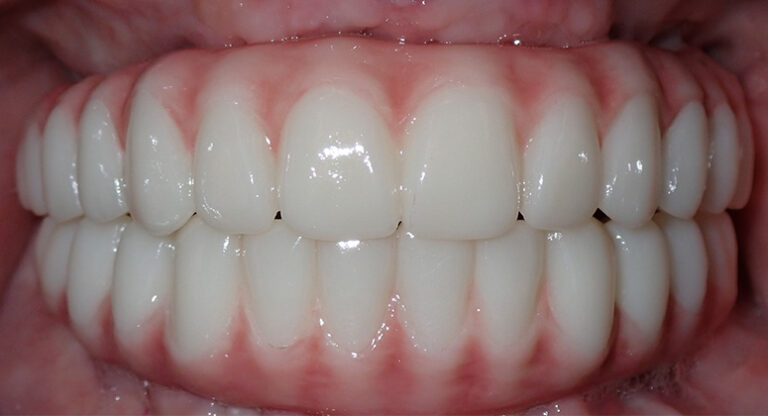
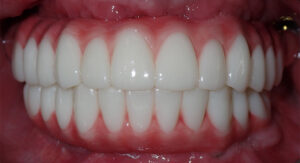
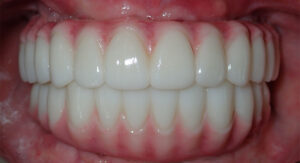
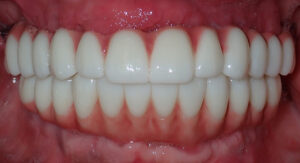
Replacing a full upper or lower arch is a larger investment. Full-mouth implant solutions commonly range from $25,000 to $50,000, depending on the technique and materials chosen.
What Are the Cost Differences Between All-on-4 and All-on-6 Implants?
All-on-4 uses four implants to support a full arch and typically costs about $20,000 to $30,000. All-on-6 adds two more implants for extra stability and generally ranges from $30,000 to $45,000. The best option depends on your bone quality, long-term goals, and your dentist’s recommendation.
How Do Implant-Supported Dentures Compare in Price?
Implant-supported dentures combine implants with removable prosthetics. They’re often less expensive than a full fixed arch and usually fall in the $15,000 to $35,000 range, depending on the number of implants and denture style. This choice offers better retention and comfort than traditional dentures.
When weighing full-arch options, consider lifestyle and expectations as well as cost when choosing between fixed and removable solutions.
Factors Influencing Dental Implant Choice & Cost
Mechanical and biological maintenance needs differ between fixed and removable implant prostheses because of materials and design. Anatomical limits, age-related concerns, lifestyle, cost, maintenance, access to care, and past experience (of both provider and patient) all affect prosthesis selection. Ultimately, patient expectations and financial means shape the final choice.
Full-arch removable vs fixed implant restorations: A literature review of factors to consider regarding treatment choice and decision-making in elderly patients, K Vazouras, 2021
Does Dental Insurance Cover Dental Implant Costs?
Insurance coverage varies. Many plans treat implants as elective or cosmetic and won’t cover the full cost, though some policies offer partial benefits when implants are medically necessary.
Recent research highlights how insurance rules, cost-sharing, and eligibility affect who receives implants and how much patients pay out of pocket.
Dental Implant Insurance Coverage & Out-of-Pocket Costs
Studies indicate that people covered by national health insurance respond to changes in out-of-pocket implant costs, while those on medical aid programs are less sensitive because copayments are already low. Lowering copayments and expanding age eligibility were linked to increased implant use. Conversely, raising fees placed more short-term fiscal pressure on insurance systems than demographic aging.
Analyzing the Impact of Expanding Dental Implant Coverage on National Health Insurance Finances in an Aging Society, 2025
What Insurance Plans Commonly Include Implant Coverage?
Some plans provide partial implant benefits, especially when implants are necessary for oral health rather than purely cosmetic reasons. Always check your plan’s details, limits, and prior authorization requirements before starting treatment.
What Financing Solutions Are Available for Dental Implants?
If upfront cost is a concern, there are options. Many dental practices, including Dentistry by Dr. Kaplansky, offer in-house payment plans. Third-party lenders also provide patient loans and flexible payment programs so you can spread the cost and make treatment more manageable.
How Does the Dental Implant Procedure Affect Overall Cost?
Implant treatment happens in stages, and each step contributes to the final price.
What Are the Cost Implications of Each Stage: Consultation, Surgery, and Restoration?
- Consultation: Initial exams and planning typically range from $100 to $300.
- Surgery: Placement of the implant post commonly costs $1,500 to $3,500.
- Restoration: Attaching the final crown usually adds $1,000 to $2,500.
Knowing these stages helps you budget and compare plans from different providers.
How Does Dentist Expertise and Technology Influence Pricing?
Experience and equipment influence fees. Highly experienced implant dentists may charge more because of their track record. Advanced tools like 3D imaging and computer-guided surgery improve precision and outcomes but can increase costs. Consider both clinician skill and available technology when evaluating value.
How Do Dental Implants Compare to Alternatives in Terms of Cost and Value?
Comparing options helps you weigh short-term cost against long-term benefit.
What Are the Price Differences Between Implants, Dentures, and Bridges?
- Dental implants: Usually $3,000 to $5,000 per implant.
- Dentures: Full dentures commonly cost $1,000 to $3,000; partials range from $500 to $2,000.
- Bridges: Often $2,000 to $5,000, depending on how many teeth are replaced.
What Are the Long-Term Benefits and Costs of Each Option?
Implants require a higher up-front investment but usually last longer and help preserve bone and adjacent teeth. Dentures and bridges can cost less initially but may need more repairs or replacements over time, which raises lifetime cost. Factor durability, maintenance, and oral-health impact into your decision.
Research into long-term financial outcomes suggests implants can be more cost-effective over decades when durability and oral health benefits are considered.
Dental Implant Cost-Effectiveness vs. Other Prostheses
This study compares the cost-effectiveness of implants (Implant), insurance-covered fixed dental prostheses (IFDP), and private fixed dental prostheses (PFDP) for a single missing molar, using an Incremental Cost Effectiveness Ratio (ICER). A Markov model followed outcomes over a maximum of 30 years to evaluate long-term cost and benefit.
Cost-effectiveness of molar single-implant versus fixed dental prosthesis, 2018
Component | Average Cost Range | Description |
Single Dental Implant | $3,000 – $5,000 | Includes implant post, abutment, and crown. |
Full Mouth Implants | $25,000 – $50,000 | Comprehensive replacement for all teeth. |
Bone Grafting | $300 – $3,000 | Necessary for patients with insufficient bone density. |
Dental implants are a meaningful investment in your oral health. Understanding costs, local pricing differences, and financing choices helps you make a confident, informed decision about treatment.
Frequently Asked Questions
What are the potential complications of dental implant surgery?
Dental implant surgery is generally safe, but complications can happen. These may include infection at the site, nerve irritation, sinus issues, or failed integration if the implant doesn’t bond with the bone. Conditions like uncontrolled diabetes, smoking, or poor oral hygiene can raise risk. Talk through your medical history and concerns with your dentist so they can reduce risks and plan for the best outcome.
How do I prepare for a dental implant procedure?
Preparation usually starts with a thorough exam and imaging to assess bone health. Your dentist may advise pausing certain medications or quitting smoking to improve healing. Clear communication about medications, medical conditions, and expectations helps reduce anxiety and sets you up for a smoother process.
What is the difference between traditional implants and mini implants?
Traditional implants use a larger titanium post placed into the jawbone and provide strong support for crowns or dentures. Mini implants are smaller and less invasive, sometimes used when bone volume is limited or for temporary stabilization. Mini implants can be a quicker option but may not offer the same long-term stability as traditional implants in every case.
Can dental implants be removed if necessary?
Yes—though removal is uncommon. Indications for removal include persistent infection, failed integration, or complications with surrounding bone or gum tissue. Removal is a surgical procedure and may require further treatment to restore the site. Your dentist will recommend the best plan if removal becomes necessary.
What should I do if my dental implant feels loose?
If an implant feels loose, contact your dentist right away. Looseness can signal infection, bone loss, or poor integration. Early evaluation improves the chance of correcting the issue, which may involve treatment to stabilize the implant or, in some cases, removal and replacement.
Are there dietary restrictions after getting dental implants?
After implant surgery, stick to soft foods while the site heals — think yogurt, smoothies, mashed potatoes, and soups. Avoid hard, crunchy, or sticky foods that might disturb healing. Your dentist will tell you when and how to reintroduce a normal diet based on your healing progress.
What is the typical lifespan of dental implants?
With good oral hygiene and regular dental care, implants commonly last 10 to 15 years or longer — many patients keep them for 20 years or more. Proper home care and follow-up visits significantly improve longevity.
Are there any risks or complications associated with dental implants?
Like any surgery, implants carry risks such as infection, nerve irritation, sinus problems, or implant failure. These complications are uncommon when treatment is planned and performed by an experienced clinician. Be open about your health history so your dentist can minimize risk.
How do I choose the right dentist for my dental implant procedure?
Choose a dentist or specialist with dedicated implant training, solid patient reviews, and a history of successful cases. A consultation lets you assess their approach, technology, and whether you feel comfortable with the team. Trust and clear communication are essential.
What aftercare is required following dental implant surgery?
Follow your dentist’s post-op instructions: manage pain with recommended medications, avoid hard foods while healing, and maintain gentle oral hygiene around the site. Attend follow-up visits so your dentist can monitor healing and address problems early.
Can dental implants be placed immediately after tooth extraction?
In some cases, implants can be placed at the same appointment as an extraction (immediate placement). That can shorten treatment time, but suitability depends on bone condition and tissue health. Your dentist will evaluate whether immediate placement is appropriate for you.
What should I expect during the dental implant procedure?
Treatment typically begins with a consultation and imaging to plan placement. During surgery, the implant post is placed into the jawbone and allowed to heal and integrate. After integration, your dentist attaches the abutment and places the crown. The full process can take several months but results in a stable, natural-looking tooth replacement.