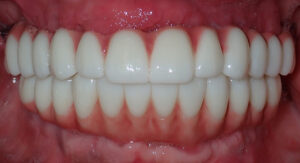
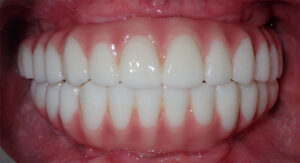
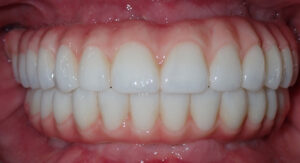
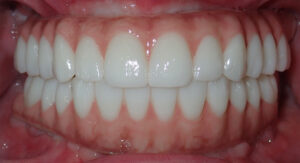
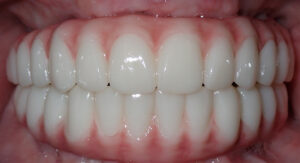
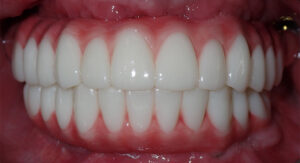
Missing or failing teeth can lead to bone loss, compromised chewing, and a shrinking smile—but All-on-4 dental implants rebuild an entire arch on just four implants in one visit, restoring function, preserving bone, and boosting confidence from day one. This guide explains the All-on-4 concept, step-by-step procedure, key benefits, comparisons to traditional methods, recovery and aftercare, potential complications, and how to determine if you’re a candidate—culminating in a simple way to schedule a consultation with Dr. Kaplansky in the Gasport, Lockport, or Buffalo, NY area.
What Is the All-on-4 Dental Implant Concept?
All-on-4 dental implants replace a full arch of missing teeth by placing four strategically angled titanium implants in the jawbone, immediately supporting a provisional bridge for improved chewing, speech, and facial support. Understanding this concept lays the foundation for its predictability and efficiency.
How Does the All-on-4 Principle Use Four Implants for Full Arch Restoration?
The All-on-4 principle uses four implants—two placed vertically in the front jaw and two tilted posteriorly—to maximize contact with denser bone and avoid sinus cavities and nerve canals. By angling the rear implants at 30–45°, the treatment often eliminates the need for grafting and leverages available bone volume for stable support. This arrangement enables a fixed bridge on the same day, streamlining the path to a new smile.
All-on-4 Procedure and Bone Grafting
The All-on-4 procedure often eliminates the need for bone grafting by strategically angling the implants to maximize contact with denser bone. This approach streamlines the treatment process and reduces the invasiveness of the surgery.
Malo, P., et al., “All-on-4 immediate function concept with tilted implants: a retrospective clinical study” (2011)
This study supports the efficiency and reduced need for bone grafting in the All-on-4 technique.
What Is Osseointegration and Why Is It Crucial for All-on-4 Stability?
Osseointegration is the biological fusion of titanium implant surfaces with jawbone tissue, forming a solid anchor that withstands chewing forces and secures the prosthesis. This process, taking three to six months, transforms individual implants into a unified foundation—ensuring long-term stability and preventing micro-movement that could compromise implant success.
Osseointegration in Dental Implants
Osseointegration is the process where a titanium implant fuses with the jawbone, forming a stable anchor. This biological process is crucial for the long-term success of dental implants, ensuring they can withstand chewing forces and remain firmly in place.
Branemark, P. I., Osseointegration in Clinical Dentistry (1985)
This research is fundamental to understanding the stability of All-on-4 implants.
Which Jawbone Areas Are Involved in the All-on-4 Procedure?
Before placement, digital imaging identifies key anatomical regions for implant insertion:
- Maxilla (upper jaw) → Uses anterior bone, tilts posterior implants to avoid sinus.
- Mandible (lower jaw) → Leverages dense symphysis and canine regions.
- Sinus cavities → Posterior implants angled to bypass sinus floor.
- Inferior alveolar nerve → Mapped and avoided in lower posterior sites.
Each area’s evaluation guides precise implant positioning, enhancing osseointegration and patient comfort while setting the stage for the surgical procedure.
How Is the All-on-4 Dental Implant Procedure Performed Step-by-Step?
All-on-4 treatment follows a defined sequence—consultation and planning, surgical placement, provisional loading, healing, and final prosthesis—to deliver predictable, same-day smile restoration.
What Happens During the Initial Consultation and Digital Planning?
During the initial visit, Dr. Kaplansky performs a clinical exam and captures a CBCT scan to assess bone density, anatomy, and sinus proximity. Advanced 3D planning software designs implant positions, custom surgical guides, and provisional prosthesis contours. This digital blueprint ensures precise implant angulation and optimal esthetics before entering the operatory.
How Are the Implants Surgically Placed and Positioned?
After local anesthesia, any remaining teeth are gently extracted, and ridge reduction is performed as needed. The surgical guide directs pilot drills and sequential osteotomy steps. Two anterior implants are inserted axially, and two posterior implants are angled to 30–45° in denser bone zones, maximizing stability without bone grafting. The flap is closed or left open according to tissue management protocols.
What Is the Immediate Provisional Prosthesis and How Does Same-Day Teeth Work?
The immediate provisional prosthesis is a prefabricated or milled acrylic bridge affixed to the four implants within hours of surgery. It distributes occlusal forces evenly, protects surgical sites, and allows patients to leave with fixed teeth—enhancing comfort, function, and confidence on day one.
How Long Is the Healing and Osseointegration Period?
The initial soft-tissue healing phase takes 1–2 weeks for reduced swelling and discomfort, followed by a three- to six-month osseointegration period during which bone fuses to implant surfaces. Patients progress from a soft to a normal diet as healing advances, ensuring gradual load adaptation and implant stability.
When and How Is the Final Prosthesis Attached?
Once osseointegration is confirmed, the provisional bridge is removed and a durable, screw-retained prosthesis—often milled from zirconia or high-strength acrylic with porcelain teeth—is secured. This final restoration offers superior esthetics, optimal occlusion, and long-term durability for everyday function.
What Are the Key Benefits of All-on-4 Dental Implants?
All-on-4 implants deliver a permanent full-arch solution that enhances appearance, restores function, preserves bone, and reduces treatment time compared to removable dentures or multi-implant approaches.
How Do All-on-4 Implants Improve Aesthetics and Confidence?
All-on-4 restorations feature custom-designed teeth and gum contours matched to facial proportions, creating a natural, youthful smile. Stabilized facial support prevents lip collapse and bone resorption, boosting self-esteem and social engagement.
In What Ways Do All-on-4 Implants Enhance Chewing and Speech?
Because implants fuse with bone, the fixed bridge resists movement under load—enabling chewing forces comparable to natural teeth and clear enunciation. Patients experience increased bite efficiency and confident speaking, eliminating slipping or clicking associated with dentures.
How Do All-on-4 Implants Preserve Jawbone and Oral Health?
Titanium implants stimulate the underlying jawbone during function, maintaining bone volume and preventing the facial sagging seen with tooth loss. This biological load transmission supports gum health, reduces periodontal pockets, and helps preserve adjacent natural teeth.
Why Is the All-on-4 Procedure More Efficient and Faster Than Alternatives?
By using four implants and avoiding routine bone grafting, All-on-4 compresses treatment time from months or years to a single surgical appointment plus a defined healing period. Same-day provisional teeth reduce the number of visits and accelerate the return to daily life.
How Do All-on-4 Dental Implants Compare to Traditional Implants and Dentures?
All-on-4 offers a streamlined full-arch solution with fewer implants and less grafting than traditional multi-implant or removable denture approaches—optimizing cost, time, and comfort.
What Are the Differences in Implant Number, Bone Grafting, and Treatment Time?
Treatment Type | Implants Required | Bone Grafting Need | Treatment Duration |
All-on-4 | 4 per arch | Rarely needed | 1-day surgery + 3–6 months healing |
Traditional Full-Arch | 6–8 per arch | Often required | 6–18 months total |
Removable Dentures | 0 (supported by gums) | Not applicable | Weeks for fabrication |
What Are the Advantages of Choosing All-on-4 Over Traditional Methods?
All-on-4 minimizes surgical complexity, shortens healing timelines, and lowers overall cost by eliminating routine grafting. Immediate load bridges restore function and confidence immediately, while fewer implants reduce the risk of complications.
When Might Traditional Implants or Dentures Be a Better Option?
Patients with severe bone loss may require grafting before any implant approach. Individuals seeking removable prosthetics for budget reasons or minimal surgery might prefer dentures. Also, single-tooth gaps often receive traditional implants and crowns for targeted replacement.
What Should Patients Expect During All-on-4 Recovery and Aftercare?
Recovery from All-on-4 blends soft-tissue healing with gradual bone integration—guided care optimizes comfort and implant success.
How Is Pain and Swelling Managed Immediately After Surgery?
Typical post-op care includes:
- Rest and limited activity for 24–48 hours.
- Intermittent ice packs to control swelling.
- Prescribed analgesics and anti-inflammatory medications.
- Gentle oral rinses to maintain hygiene.
Effective management keeps discomfort minimal and supports uneventful healing.
What Are the Recommended Diet Restrictions and Progression?
Patients follow:
- Days 1–7: Liquid nutrition (broths, smoothies).
- Weeks 2–6: Soft foods (mashed potatoes, yogurt, cooked vegetables).
- After 6 weeks: Gradual return to a normal diet, avoiding hard or sticky items initially.
This progression protects implants and fosters bone integration.
How Should Patients Maintain Oral Hygiene with All-on-4 Implants?
Daily care involves:
- Soft-bristled brushes and non-abrasive toothpaste.
- Interdental brushes or floss under the prosthesis.
- Water flossers to remove debris around implant platforms.
- Antimicrobial mouthwashes to control biofilm.
Consistent hygiene reduces the risk of peri-implantitis and prolongs the restoration’s life.
What Does Long-Term Maintenance and Professional Care Involve?
Sustained success relies on:
- Semiannual dental check-ups with implant evaluation.
- Professional cleanings using specialized instruments.
- Occlusal assessments to prevent overload.
- Radiographic monitoring of bone levels.
Regular maintenance secures implant health and function for decades.
What Are Common Problems and Complications with All-on-4 Implants and How Can They Be Prevented?
While All-on-4 boasts a high success rate of around 98%, understanding potential risks and mitigation keeps outcomes predictable.
What Are the Most Frequent Complications Like Infection and Implant Failure?
Potential issues include:
- Peri-implantitis (infection around implants).
- Nerve injury (from improper implant positioning).
- Sinus irritation (in upper jaw cases).
- Prosthetic misfit or screw loosening.
Vigilant planning, sterile technique, and precise placement minimize these events.
Which Risk Factors Increase Complications and How Can They Be Mitigated?
Common risk factors and prevention:
- Smoking → cessation programs pre- and post-surgery.
- Uncontrolled diabetes → medical optimization and antibiotic protocols.
- Poor oral hygiene → rigorous home care and professional cleanings.
- Inadequate bone → CBCT-guided planning and selective grafting when needed.
Partnering with an experienced implant surgeon like Dr. Kaplansky ensures expert risk management.
How Can You Determine If All-on-4 Dental Implants Are Right for You?
Assessing candidacy involves evaluating oral health, bone volume, and overall wellness—guiding informed decisions for lasting results.
Who Is an Ideal Candidate for All-on-4 Implants?
Ideal candidates typically exhibit:
- Complete or near-complete edentulism in one or both arches.
- Sufficient bone in anterior regions for implant anchorage.
- Good general health or controlled chronic conditions.
- Commitment to oral hygiene and regular dental visits.
- Non-smokers or willingness to quit for surgery and healing.
This profile ensures predictability and long-term success.
How to Schedule a Consultation with Dr. Kaplansky in Gasport, Lockport, or Buffalo NY?
To explore whether All-on-4 is right for you, contact Dr. Kaplansky’s office by phone or online form. Learn more about our comprehensive implant services by visiting ourDental Implants page, and set up a personalized consultation at our Gasport, Lockport, or Buffalo, NY locations. Experience expert guidance, 3D digital planning, and compassionate care on your path to a fully restored smile.